Steady comfort, Chicago winters and summers
Looking for an HVAC contractor Chicago homeowners can reach the same day? We repair, install, and maintain furnaces, central air, and boilers from Rogers Park down to Beverly, and we quote in plain ranges before any wrench turns. A live person answers the phone, and if your heat is out in a January cold snap we prioritize the call.
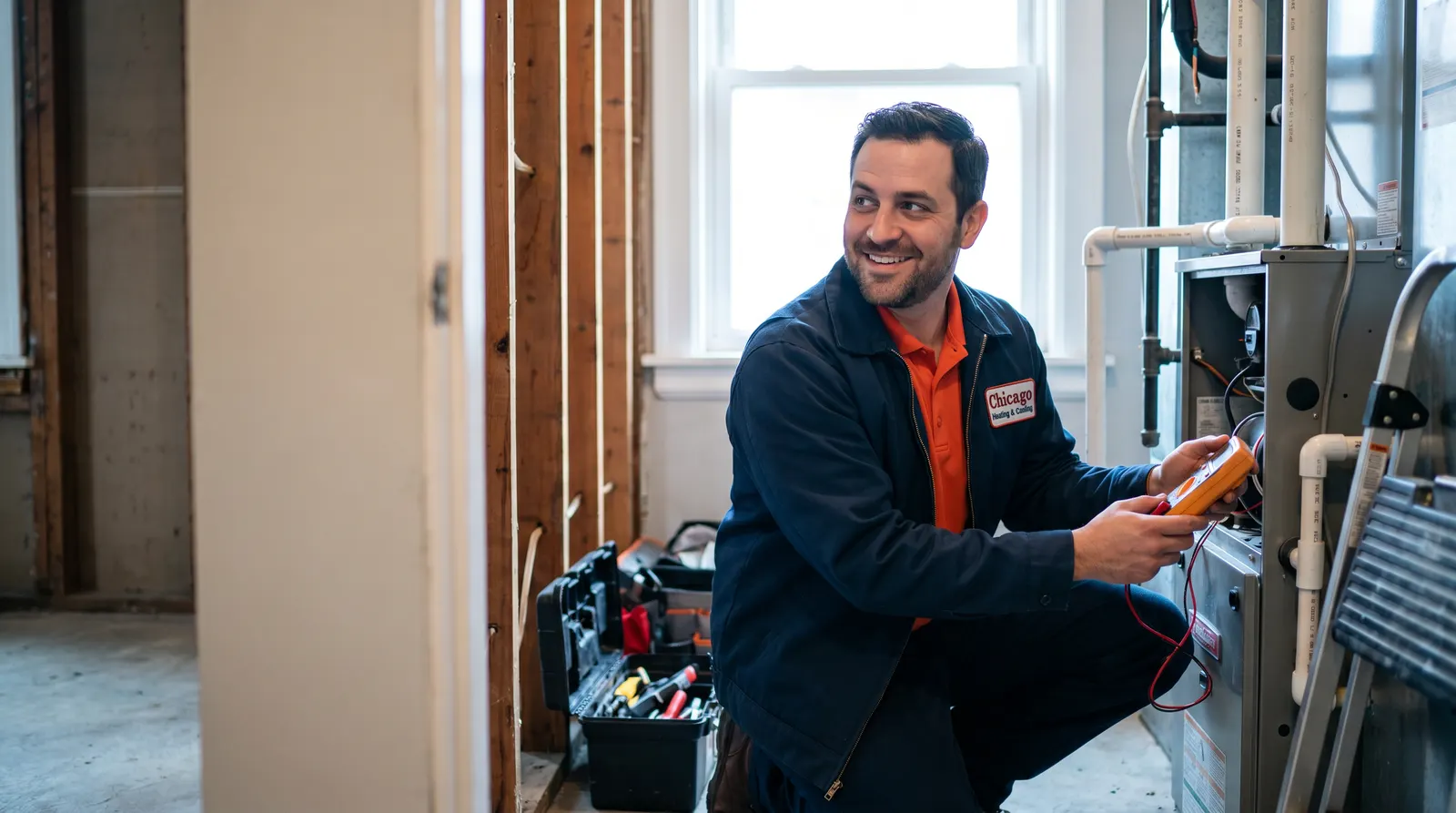
Tell us about your hvac contractor job — we'll get you a fast quote.
A firm, all-in price confirmed before we start — no surprises.
On time, done to standard, and tidy when we leave.
Reach a real Chicago hvac contractor technician to describe the problem — no call-center runaround.
We look at the actual system and explain what is going on before any work.
You get the price for the fix up front and decide before we proceed.
Serving Chicago and the surrounding area — confirm coverage by phone.
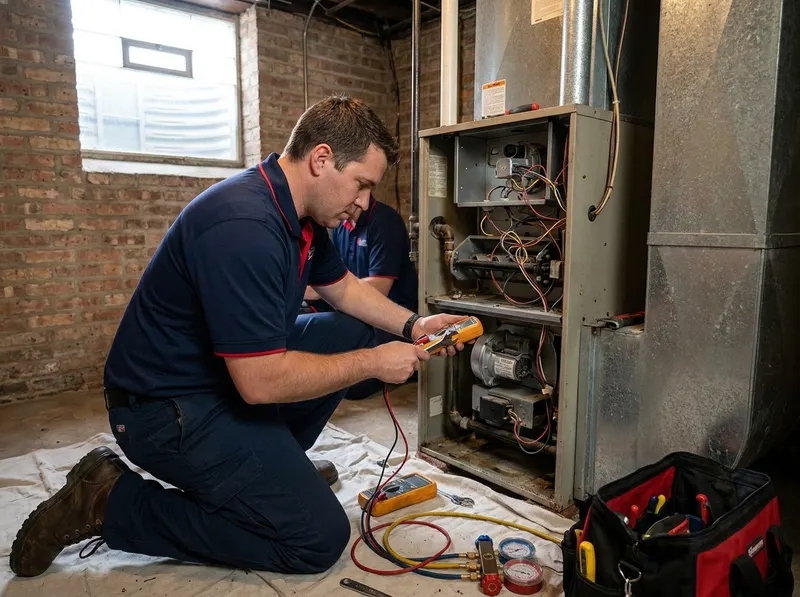
No-heat calls, short-cycling, blower and igniter failures, and error-code diagnostics on gas and electric furnaces. Most single-part repairs are handled in one visit, and the technician confirms the price before pulling the part.
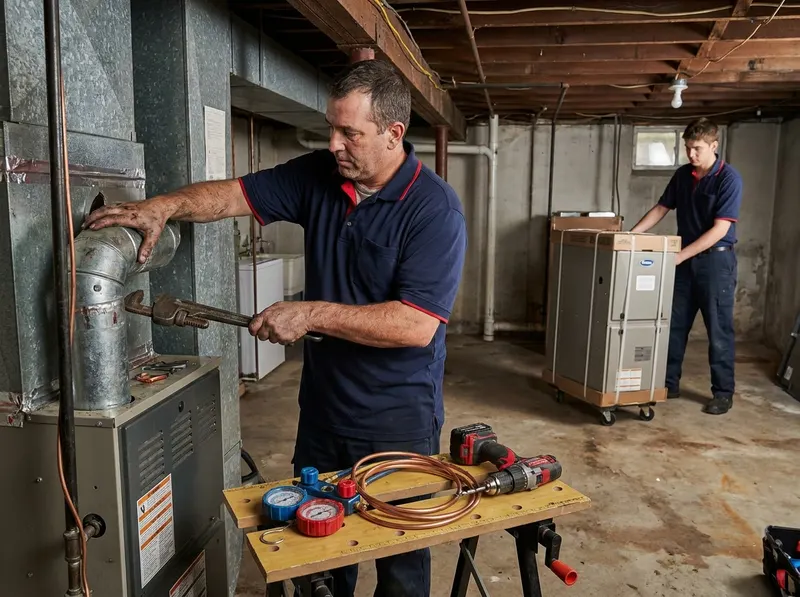
Full replacement of aging forced-air furnaces, including high-efficiency models sized to your square footage. Load calculation matters in older Chicago bungalows where an oversized unit short-cycles and wastes gas.
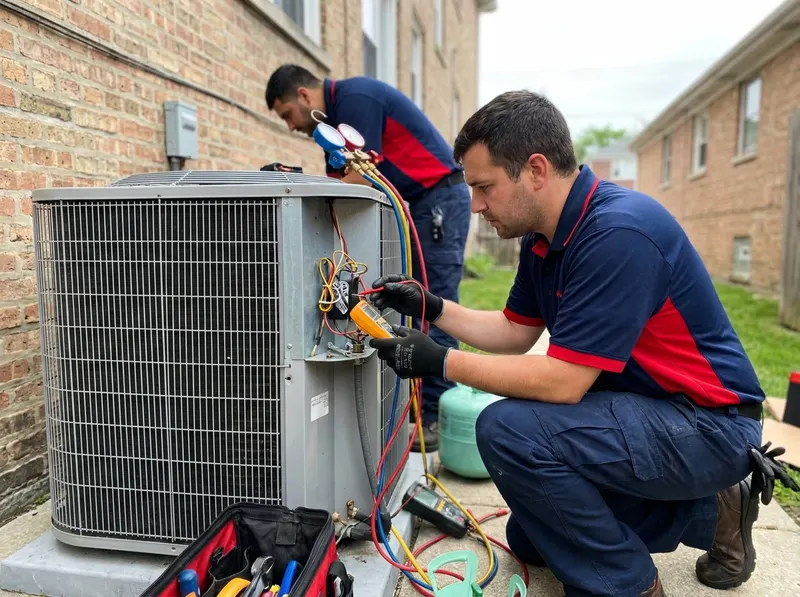
Warm-air complaints, refrigerant leaks, failed capacitors, and frozen coils on central cooling systems. Spring scheduling means shorter waits before the July heat peaks.
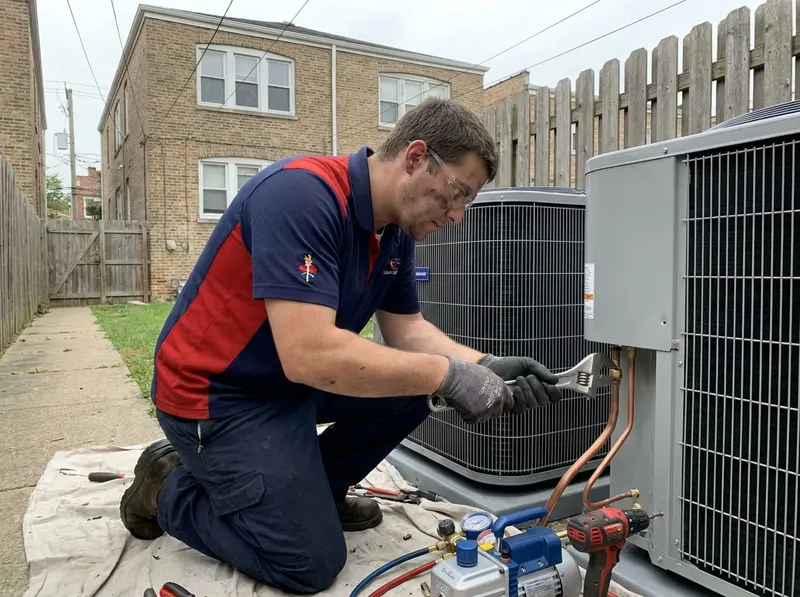
New central air and condenser installs, including high-SEER systems that cut summer bills. Correct sizing and drainage keep condensate lines from backing up in tight Wicker Park lot lines.
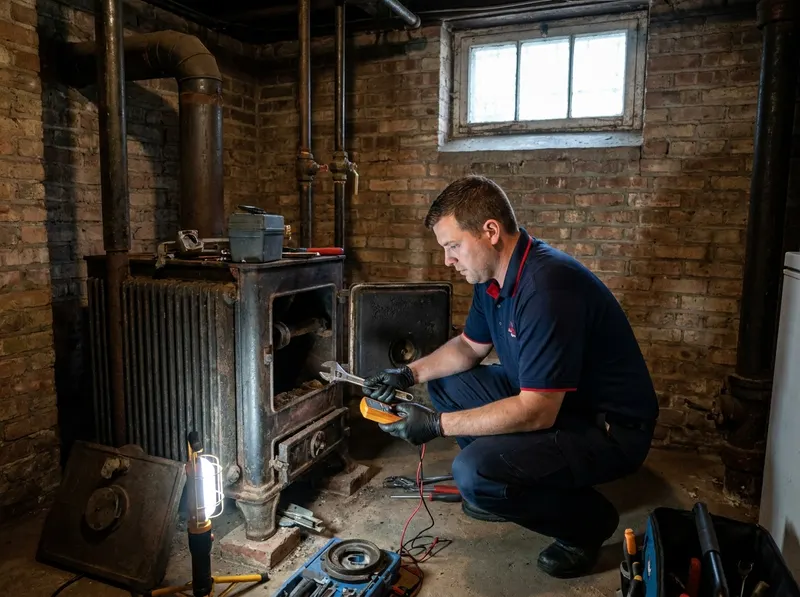
Repair and maintenance for the steam and hot-water boilers common in Chicago's older two-flats and greystones. Radiator systems get bled, tested, and pressure-checked ahead of heating season.
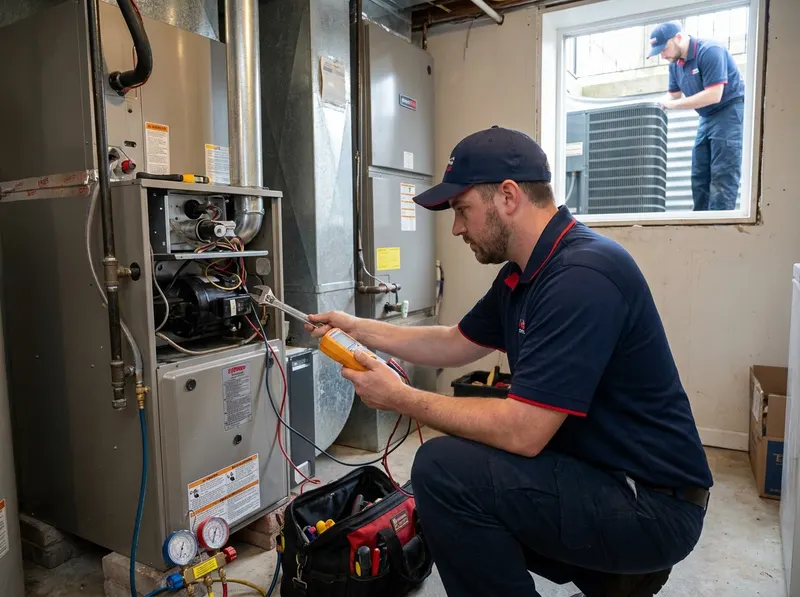
Seasonal tune-ups that catch worn parts before they fail, including fall heating checks and spring cooling checks. A scheduled visit is the cheapest way to avoid a first-freeze emergency call.
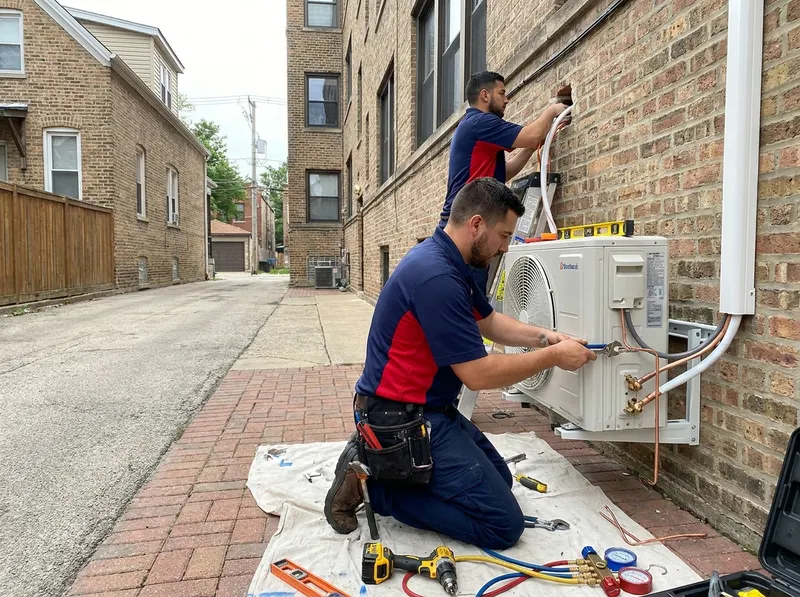
Ductless heating and cooling for additions, converted attics, and rooms a central system never reaches. A good fit for older homes where adding ductwork means opening finished walls.
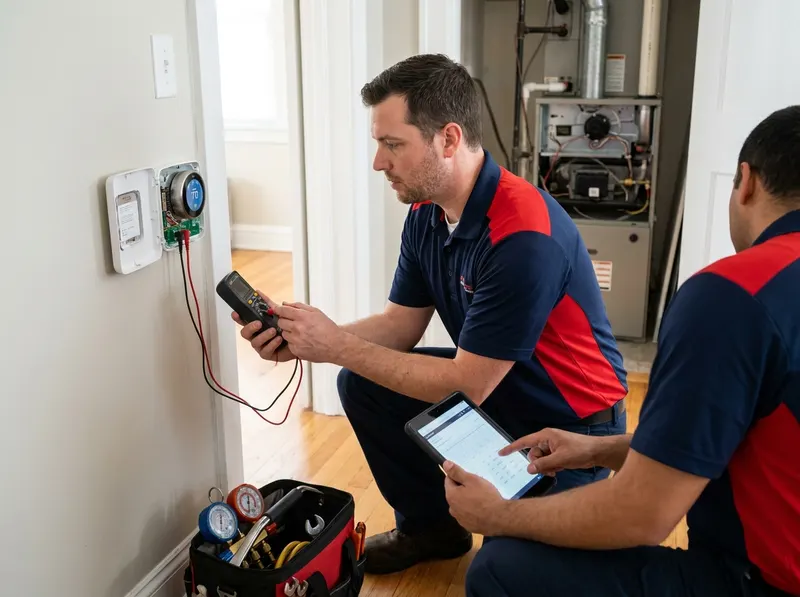
Smart-thermostat installs, wiring corrections, and full system diagnostics when the cause of a heating or cooling problem isn't obvious. The $150 minimum covers the diagnostic visit.
If your furnace runs but heats unevenly or short-cycles, choose a repair and tune-up first, since a single failed igniter or flame sensor is often a sub-$300 fix. If the unit is 15-plus years old, needs a heat exchanger, and your bills keep climbing, choose replacement, because the repair cost starts approaching the value of a new high-efficiency system. If you own an older Chicago two-flat or greystone with radiators, a boiler service or replacement fits better than a forced-air swap, since tearing in ductwork means opening plaster walls. The trade-off is simple: repair costs less today but buys less time, while replacement costs more upfront and lowers monthly bills for a decade or more. For a summer cooling decision, a repair fits a system under 10 years old with good refrigerant history, while a new high-SEER install fits a home where the compressor has already failed once.
| On-site minimum / diagnostic visit | starts at $150 |
| Furnace repair (single part) | $150–$500 |
| Central AC repair (capacitor, refrigerant, coil) | $150–$650 |
| Boiler service / tune-up | $180–$450 |
| Seasonal maintenance visit | $150–$250 |
| Furnace replacement (installed) | $3,500–$7,500 |
| Central AC installation (installed) | $3,800–$8,000 |
| Ductless mini-split (per zone, installed) | $3,000–$6,500 |
Call for a firm, all-in price before any work begins.
We give an upfront, written price before any work begins — you approve it first. No surprises.
Our work is done to standard and we stand behind it — a real fix, not a quick patch.
We’ll give you an honest assessment. If you don’t need the work, we’ll tell you.
Chicago's housing stock runs old, and that shapes every HVAC call — the brick bungalows around Portage Park and the greystones near Logan Square and The 606 often still run radiator boilers, while newer condos near Lincoln Park and Wicker Park lean on forced air. Lake-effect cold and polar-vortex events push no-heat calls to their peak during the first hard freeze, so a fall tune-up is worth more here than in milder climates. Tight lot lines in Pilsen and Bridgeport also mean condenser placement and condensate drainage get planned carefully, not guessed.